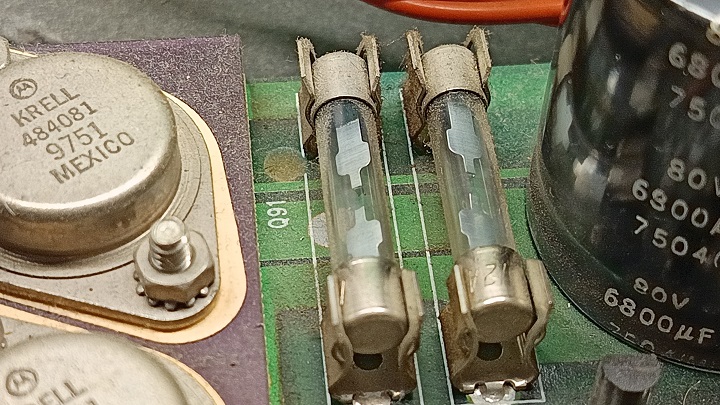
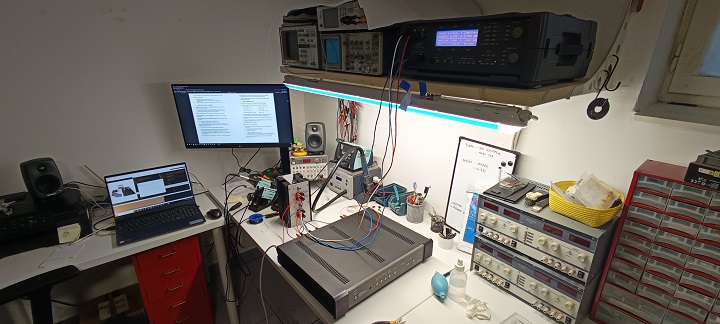
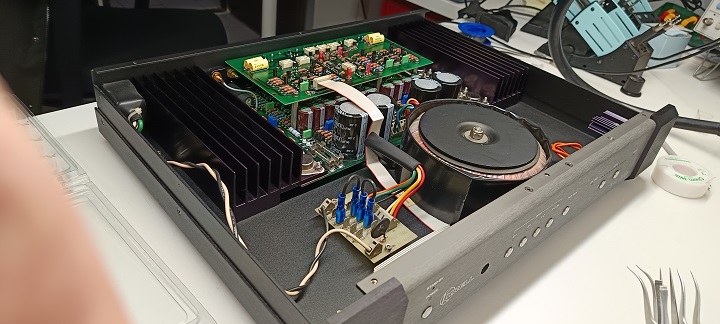
This unit had never been opened since the day it left the factory—at least, that’s what we found inside.
The main problem was a blown channel, but there was more…
A large number of components were dead—completely unusable capacitors, resistors, and semiconductors degraded by heat over time. There was also greasy residue, most likely caused by one of the owners’ “bright ideas” of cleaning the RCA inputs with contact spray, which ended up all over the motherboard.
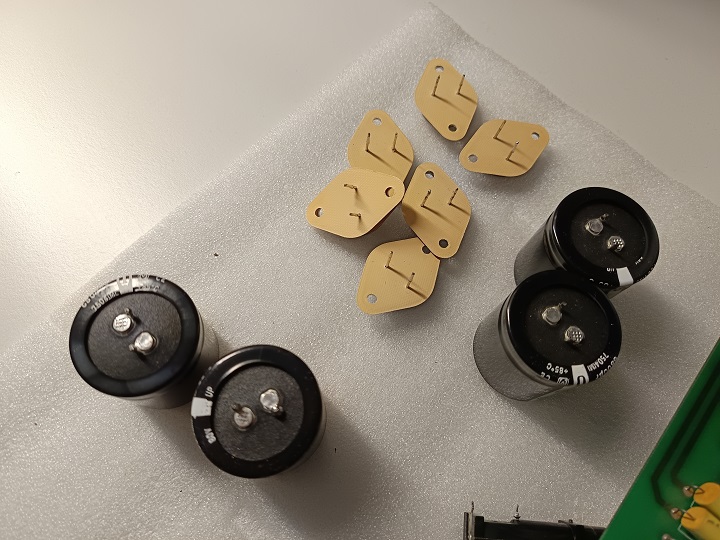
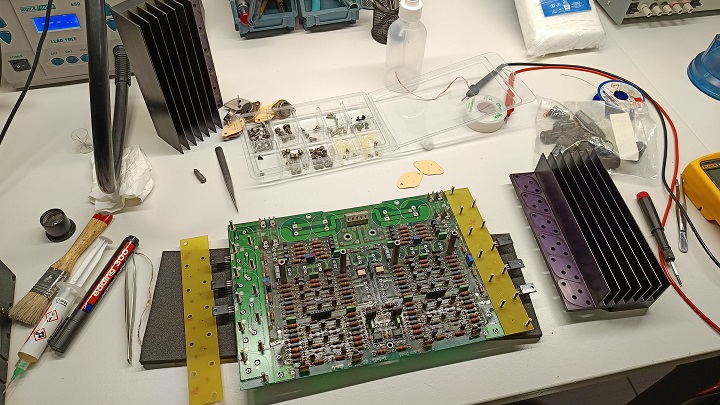
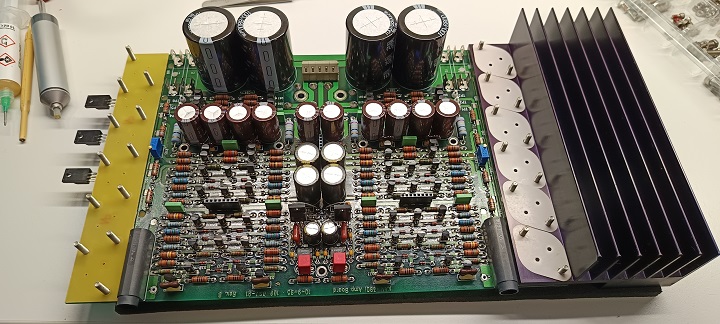
We performed a thorough PCB cleaning and removed all components that needed replacement.
A clean start.
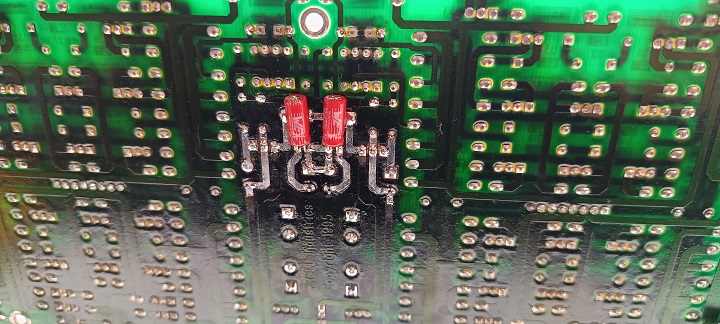
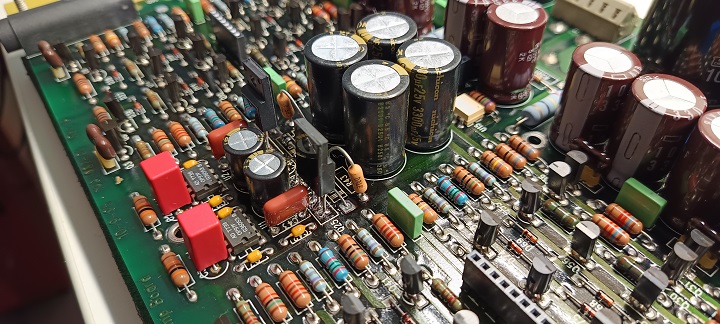
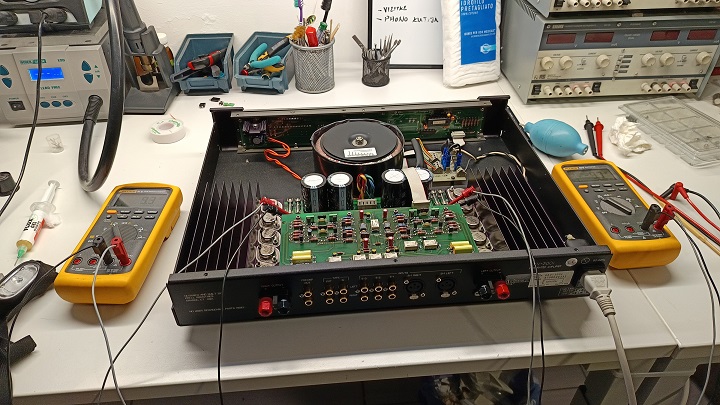
After the repair and installation of new, top-quality components—better than those originally used by the factory (longer lifetime, higher ripple current, and higher voltage ratings)—everything was tested step by step. DC offset and output stage bias were carefully adjusted.
The amplifier was tested against all factory specifications: maximum power into 8, 4, and 2 ohms (burst), frequency response, THD, and signal-to-noise ratio.
Now it performs like a new unit—if not better, especially in terms of sound quality.
It’s a great amplifier: excellent sound, strong control, and plenty of power.